

How to detect kidney stone
Medically termed as nephrolithiasis, the formation of kidney stones is one of the most common ailments in adults. Scientifically, these stones formed in kidneys are known as renal calculi, which are basically hard substances formed of salts and minerals made up of calcium and uric acid in your body.
Medically termed as nephrolithiasis, the formation of kidney stones is one of the most common ailments in adults. Scientifically, these stones formed in kidneys are known as renal calculi, which are basically hard substances formed of salts and minerals made up of calcium and uric acid in your body.
These stones create an obstruction of the flow of urine in the urinary system, or create blockages in the kidneys and hamper the basic functioning of them. The size of these stones is invariable, and can vary between a fraction of an inch to even the size of the whole kidney.
The first and foremost major effect of formation of stones in kidneys results in irregular functioning of the urinary system, of which there are many symptoms. Usually, one of every 20 adults around the world faces this condition once in their entire lifespan. Also, being a disease more common in men as compared to women, with the most prominent age group of patients being between 20 to 49 years of age.

Following are some of the very basic symptoms as per which one can detect the formation of kidney stones in his/her body:-
Pain in the lower back – If you are suffering from excruciating pain in your lower back, and it is not going off even after a change in body postures while sitting, standing or even laying on your bed, it signals that your kidney(s) is suffering from the formation of kidney stones within.
Pain in abdomen or groin – Not only in your lower back, but the pain caused by the formation of kidney stones can become more prominent and longing in terms of duration if it is caused in abdomen or regions surrounding groin. This pain usually waxes and wanes with time, and might vary in the degree of severity.
Nausea and vomiting – If you are suffering from sudden nausea or conditions of vomiting after suffering from continuous pain in lower back or abdomen, it is one clear sign of formation of kidney stones. It can be followed by pain which is usually very high in terms of severity.
Bloody urine – Kidney is one of the key organs of the urinary system of your body, and if there is formation of stones in your kidney(s), the process of formation of urine will eventually get disturbed. This will lead to the irregular formation of urine, which usually flows out with blood.
Fever and chills – The phenomenon of fever occurs due to a variety of reasons, and the formation of kidney stones too is one of them. If you are suffering from severe fever, accompanied with pain in lower back or abdomen or chills in your whole body, it is one clear indication of this medical emergency.
Lack or difficulty while urinating – Even after consumption of liquid (prominently water), even if you are not able to urinate as your usual frequency, it signals that your kidney(s) are unable to fully function for the required process in the urinary system of your body. In such cases, the flow of urine is obstructed by the stones formed within the kidney(s).
Penile/testicular pain – More prominently a condition faced by male individuals, if one is suffering from unusual pain in other parts surrounding the urinary system, like penis or testicles, it is perceived as a side effect of the ill-functioning of kidney(s) or urinary system in a whole.
While all of the aforementioned phenomena are usually perceived as prior symptoms of kidney stones, there are further in-depth processes and diagnosis which can further confirm the formation of kidney stones and make way for the treatment processes.
The first step of the diagnosis of kidney stones is the conduction of imaging tests, as per which a non-contrast CT scan is done in an emergency room. Conduction of these tests usually confirms the exact reason which is causing the lower back and abdominal pain, which is one of the most common reasons for the formation of kidney stones.
If these tests signal a basic idea of confirmation of kidney stones, further processes like radiation and ultrasound as well as abdominal X-Rays are carried out, which give a further elaborative idea of the ill-functioning of the components and reasons behind the formation of kidney stones.

All these tests and treatment should be carried out under careful supervision as per the guidance and advises followed by concerned and well-trained medical professionals.

How to detect breast cancer at an early stage
One of the most common types of cancers primarily found in women, breast cancer is usually not as easy to know about as other kinds of cancers and tumors, in terms of symptoms. However, if early detection of breast cancer can be done, it saves up a lot of hassle of treatments and stress.
One of the most common types of cancers primarily found in women, breast cancer is usually not as easy to know about as other kinds of cancers and tumors, in terms of symptoms. However, if early detection of breast cancer can be done, it saves up a lot of hassle of treatments and stress.
The symptoms of breast cancer are usually very minor and can be hard and very minute to find. However, if one is able to witness these changes in her breast, there are strong chances of her suffering from breast cancer and should immediately consult a doctor regarding the same and following treatment procedures.
Following are the most common symptoms by which one can detect breast cancer at a very early stage, which if known or felt at the right time, will save a lot of resources:
If there is any kind of swelling or redness occurring in one or both the breasts, there are strong chances that it is the same spot where the tumor might be in the process of formation.
Women usually have both their breasts similar in size, however, if one is feeling that one of her breasts is showing sign of growth in terms of its size, this might be an unusual swelling occurring due to tumor.
When the nipple of one or both the breasts shows signs of dissimilarity or appearance, there is a strong chance that the tumor might be in formation around the area of that particular nipple(s).
If the nipple discharges some other kind of fluid apart from breast milk, it shows that the affected breast(s) is unable to form breast milk and this particular fluid might be formed due to the formation of tumor inside.
Pain is one of the easy forms to detect whether something is wrong in one particular part of body or not. In the case of breast cancer too, one can suffer from gradually increasing pain in one or both the breasts.
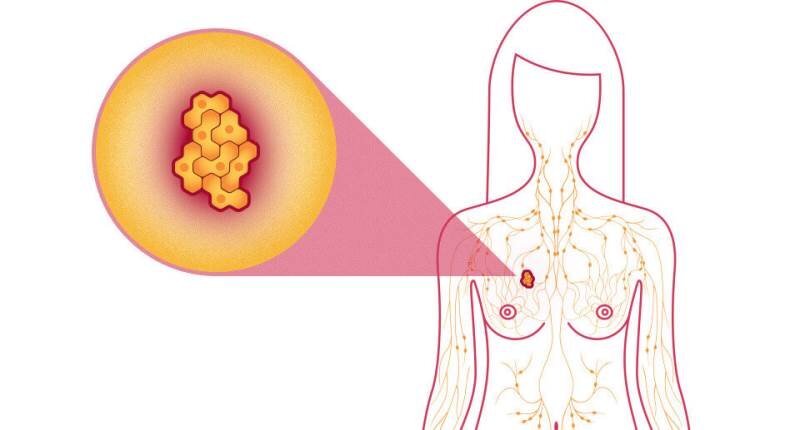
If one is able to feel any kind of lump or swelling after touching her one or both the breasts, it shows that the tumor has grown in size big enough to directly be felt.
While one can detect this by feeling whether there is any kind of lump in one or both the breasts, if there is no lump to be felt, but an unusual swelling in a part or whole breast, it is a clear sign of invasive breast cancer.
If one is feeling any kind of irritation or swelling on or around one or both the breasts, it signals that the breast tumor is forming such kind of symptom.
If the nipple(s) of one or both the breasts are retracting inwards, this might happen as a result of an increase in the swelling of tumor, which might be forcing the nipple(s) to not be in their optimal situation.
Usually, nipples in humans are in light or dark brown in color. However, if one is sensing any change in the color of her nipple(s) – they might be turning reddish or scaly – it is a clear sign of tumor.
If one is feeling that her nipple(s) of one or both the breasts have shifted off from their usual positioning, it shows that the formation of tumor inside the concerned breast(s) is forcing such a thing to happen.
If one can feel that the surface of her breast(s) is showing sign of formation of a ridged pattern unlike the usual soft touch, this hardening of skin is diagnosed as a sign of breast cancer.
Apart from swelling or pain, if one is feeling that one or both of her breasts are feeling heavier than the usual feel, it usually happens due to the swelling of tumor inside one or both of them.

All these are preliminary symptoms of both invasive as well as inflammatory breast cancer, which are quite minute and might not be too noticeable at the very first place. However, such careful observations, if done rightly, will not only save a lot of possible medication but also mental stress. If one feels any of these symptoms, it is advisable to consult the respective doctor for further processes regarding diagnosis and treatment, including all the essential check-ups.

How to know eyesight is weak – common symptoms elaborated
In the current scenario, when all of us are more prone to the usage of screens and have sort of unhealthy eating habits and lifestyle like taking unwanted stress, reduction in sleeping hours, the problem of eye weakness has become much more common. Right from kids of young age to the people in their old age, eye weakness has become a common phenomenon across all age groups – it’s only the magnitude of the weakness that differs.
In the current scenario, when all of us are more prone to the usage of screens and have sort of unhealthy eating habits and lifestyle like taking unwanted stress, reduction in sleeping hours, the problem of eye weakness has become much more common. Right from kids of young age to the people in their old age, eye weakness has become a common phenomenon across all age groups – it’s only the magnitude of the weakness that differs.
Following are some of the very common symptoms by which one can determine whether he/she is suffering from eye weakness or not:-
Blurry close-up vision – Scientifically termed as hyperopia, it occurs if someone is unable to see objects placed closer to him/her clearly. Due to this, the objects placed closer to him/her appeared a bit blurred, and this blurriness can increase with the gradual weakening of the eye, or in this case, growth in hyperopia.
Blurry distant vision – Just opposite to the condition aforementioned above, if someone is unable to see things placed at a suitable distance from him/her quite clearly, he/she is suffering from myopia. In common terminology, it is often regarded as nearsightedness, and just like in hyperopia, the condition of blurriness can worsen with time if proper attention is not paid.
Lack of clarity in the vision for objects placed both far and near – This is one condition that is even worse than myopia as well as hyperopia. Technically termed as astigmatism, the person suffering from it will not be able to see things clearly which are placed both at a distance as well as those closer to him/her.
Lack of clear vision in the night – If a person can see things clearly before the sun sets down and after that, his/her vision reduces, it is a clear indication of lack of night vision. This happens due to the fact that the daylight helps him/her in seeing things clearly, but as soon as the amount of light reduces, the problem arises.
Difficulty in reading and typing – If a person is suffering from a consistent vision of all kinds of font sizes, colors, and styles even with an increase in concentration on them, he/she is suffering from mild eye weakness. Even while typing, such a person finds difficulty in adjusting to the letters, thus reducing his typing speed quite drastically.

6. Eye fatigue – This problem is one of the most common ones in the people of the current generation, across all the age groups. Eye fatigue usually happens when a person is subjected to prolonged usage of screens such as mobile phones, computers, and televisions. Due to this, at the end of the day, he/she suffers from tired eyes.
7. Constant headaches – If one is suffering from constant headaches as a side effect along with eye fatigue, he/she needs to get his/her eyes checked immediately with an eye specialist. In such a scenario, the headache usually occurs in the middle of the head, just before the gap between the two eyes. The headaches or additional strain can also occur when one needs to increase his attention while reading, writing, or typing.
8. Double vision – When one sees a single object in a doubled manner, it is commonly called double vision. This is one of the conditions which require immediate inspection of eyes, as it can lead to more fatal conditions such as cataracts or irregularity in the shape of cornea, conditions which are more common in highly aged people.
9. Glare in low light conditions – While it is natural to shield your eyes with hands, cap, or sunglasses in extreme sunlight conditions if one is shielding his/her eyes even in low light conditions or while seeing a screen, the eyes of that concerned person have become very sensitive. This condition usually leads to the ones mentioned above, like myopia, hyperopia, and cataracts.

10. Seeing halos around lights sources – Witnessing halos around natural light sources like the sun and moon are quite a natural phenomenon. However, if someone is able to see the same kind of halos around the artificial light sources placed nearer to him/her, such as light poles and decorative lights, his/her eyes are subjected to more volatility and can lead to the weakening of cornea.

How to detect brain tumor at home – Common symptoms explained
The condition of a brain tumor sounds like one scary fact for all of us, as it involves one of the most important and fragile parts of the human body-brain. Sitting at the top of the process chain of the nervous system, the brain handles all the processes, movements, and functions of other body parts.
The condition of a brain tumor sounds like one scary fact for all of us, as it involves one of the most important and fragile parts of the human body-brain. Sitting at the top of the process chain of the nervous system, the brain handles all the processes, movements, and functions of other body parts.
However, if one is suffering from a brain tumor, no matter how small or big the tumor is, it results in failure of transmission of signals to and from the brain and other parts, resulting in a lot of abnormal behavioral patterns. Following are some of the signals by which we can determine from home that one is suffering from a brain tumor:-
1. Thinking problems and memory loss – Many people do face a problem of forgetfulness in their routine life, which is usually shrugged off if it does not happen on a daily basis. However, if this very problem of forgetfulness (loss of memory) increases in terms of frequency and magnitude, and one is unable to remember one of the most significant memory or thing happened in the current day, it is of major concern. In such a condition of the tumor, remembering things becomes a major task and matter of concern.
2. Unusual headaches – While minor headaches do persist for a maximum period of the day, if one is suffering from a brain tumor, he/she might suffer from constant headaches, and the pain in this context becomes unbearable gradually with time. Usually, such unusual headaches are not the early signs of the phenomenon of brain tumor, and it can happen if the tumor grows considerably larger in size.
3. Seizures – Often regarded as brain freeze, seizures are one of the early signs of a brain tumor. Such a condition of seizure arises when the irritation caused due to the growth of tumor in the brain results in the firing of neurons, thus eventually leading to abnormal movements of other body parts, such as arms and legs. In the condition of seizures, either one part of the human body behaves abnormally, or it can happen to the entire body.
4. Numbness – When one is suffering from a brain tumor, one might feel constant numbness in one or more parts of his/her body. In such a condition, the breakdown of the nervous system occurs due to irregular receiving or sending of signals from the brain, due to which one can’t feel a particular part of his/her body. The people in whom the tumor usually is formed in the brain stem (place where the brain and spinal cord connect with each other) do suffer from numbness in their early phases.
5. Clumsiness – When one is suffering to do the regular works due to lack of attention and reflexes, such as missing steps while climbing, struggling to maintain balance, or fumbling while handling things, he/she is considered to be suffering from clumsiness. In addition to it, in such a condition, the concerned person faces problems while speaking, expressing something, eating food. This is one of the earliest signs of a brain tumor which is usually not taken seriously by people and is passed off as carelessness.
6. Irregular or faded vision – If the tumor in the brain happens over one or both of the eyes, the concerned person can suffer from a loss in vision, or seeing one thing as doubled (double vision), blurriness in case of both near as well as distant objects and views or floating vision of even stationary objects. While some of these symptoms can be easily mistaken as common eye problems, one should not discard such signals if they refuse to go off.
7. Nausea – Nausea is considered to be one of the most common short-term ailments in a human body due to common fever or uneasiness. However, if one is suffering from nausea for a long time in an inconsistent manner, and due to which one might even suffer from unusual headaches in addition to a side effect, it is one of the clear indications of a brain tumor.

8. Mood swings – Mood swings are perceived to be a clear sign of mental discomfort, and if one faces mood swings repetitively and is unable to concentrate on one particular thing or process at a time, chances are that he/she might be suffering from a nervous breakdown or brain tumor.

How to detect nerve damage – details of all the tests required
Nerve damage, which in scientific terminology is known as peripheral neuropathy, is essentially a series of damages happening to the nervous system. This damage usually happens to the peripheral nervous system, which along with the central nervous system (including brain and spinal cord) for the entire nervous system of a human body.
Nerve damage, which in scientific terminology is known as peripheral neuropathy, is essentially a series of damages happening to the nervous system. This damage usually happens to the peripheral nervous system, which along with the central nervous system (including brain and spinal cord) for the entire nervous system of a human body.
The peripheral nervous system involves the connections of the brain to the various body parts of the human body, such as hands, legs, mouth, nose, ears, internal organs, and joints. If any damage happens to this nervous system, the brain is unable to receive and send messages to the aforementioned body parts as well as muscles and skin. This can lead to numbness or pain in the affected point of the nerve damage.
However, there are a series of examinations and tests which are conducted to detect the root cause and carry further with the required treatment of the nerve damage. Following are those tests in the required order:-
1. Preliminary examination – Whatever discomfort or symptoms you might be feeling, you must tell your doctor about it in detail. This includes all the minute details, such as the frequency, time intervals, and the magnitude of pain you are suffering. The more specific you will be about the symptoms to the doctor, the more clearly the doctor will be able to go ahead with the further checkup. After this initial further discussion and examination, the doctor might ask further questions related to your normal health, regarding if you are suffering from other chronic ailments or hereditary diseases and the medications you are taking for them.
2. Neurological examination tests – After all the initial one-to-one discussion with the doctor regarding symptoms and the health condition of yours, he will proceed further with various general neurological tests. These tests generally include a series of various tests, such as testing the sensation of your contact points such as hands and feet with the help of a pin. With this test, the doctor usually tests the various kinds of neurological functions, such as the strength of muscles, the functioning of autonomic nerves, the ability to feel different kinds of sensations, including coolness and hotness.

3. Diagnostic testing – Based on the aforementioned kinds of preliminary neurological examinations, the doctor will then pursue some diagnostic tests. These tests are based on the patient’s medical history and the magnitude and kind of symptoms he/she is facing. The main objective of diagnostic tests is to figure out the kind and frequency of activity of muscles and nerves. The various kinds of tests included in the diagnostic testing include magnetic resonance imaging (MRI), nerve biopsy, and spinal tap. However, the root cause might not be detected for the patients with longstanding neuropathy.
4. Electro-diagnostic testing – If no clear results are obtained from the various diagnostic tests, further detailed examination can be done using more advanced electro-diagnostic tests. These tests are also usually done to measure the activity of nerves and muscles, based on the response of electrical inputs. Based on these tests, the actual magnitude of nerve damage and its root cause is determined. The main electro-diagnostic tests which a neurologist generally recommends are non-invasive neurological ones, such as nerve conduction velocity (NCV) and electromyography (EMG). These tests can also be done along with diagnostic testing in order to have a clearer and elaborative idea of all the aspects related to the concerned nerve damage.
5. Various blood tests – For testing various kinds of side effects such as the presence of toxic elements in blood, abnormality in immune response, and vitamin deficiencies, blood tests are conducted. These blood tests are very beneficial in finding the root causes of neuropathy. These tests include checking the levels of vitamin B12 and folate, as well as the condition of thyroid, liver, and kidney. It also includes tests for oral glucose tolerance, antibodies related to nerve components and celiac disease, hepatitis C and B, and vasculitis evaluation.
6. Advanced additional testing – These tests are considered if the doctor finds the concerned neuropathy is of a specific type when the magnitude and responses are of different types to what the usual suspects are. In such cases, the various kinds of tests included are quantitative sensory testing (QST) and autonomic testing, which are recommended upfront by the doctor.

Heart attack – symptoms, factors affecting and possible treatments
One of the most common ailments among the people of the modern world, heart attack or heartburn occurs when there is a chance of obstruction of blood flow towards the heart muscle, caused by a possible blood clot in a particular artery or vein.
One of the most common ailments among the people of the modern world, heart attack or heartburn occurs when there is a chance of obstruction of blood flow towards the heart muscle, caused by a possible blood clot in a particular artery or vein. This reduces the supply of oxygen to the heart as well, which can result in immediate loss of breath and deterioration of the health of your heart, and in severe conditions, it can result in death as well.
Following is a thorough description of the various symptoms and factors related to the condition of heart attack, and what all possible treatments and care which one needs to undergo in this health condition:-
Symptoms of a heart attack:-
Chest pain – This is the most common symptom which one faces during the oncoming of a heart attack. When the attack actually happens, one might experience unbearable pain in the center of the chest, which may or may not go after a few minutes.
Pain in other parts of the upper body – While chest pain is the most obvious symptom of a heart attack, one must not ignore the pain which can happen in other parts of the upper body, such as the neck, shoulders, arms, or stomach. If the pain persists for longer than required followed by chest pain, it can lead to a heart attack.
Breathlessness – This is more common in cases of people suffering from chronic asthma-related issues. Before the heart attack, one might experience breathlessness which may or may not be followed by pain in the chest or other parts of the upper body.
Lightheadedness – If one is facing a situation when he/she is about to faint or feel that his body is feeling heavier than his head, chances are that he/she might be having a little circulation of blood towards the brain. This is basically called lightheadedness and is one of the clear symptoms of a heart attack.
Cold sweating – If one experiences sweating even under normal room or cold temperature conditions from the face or palms, this is usually one of the rare symptoms of a possible heart attack. In such conditions, it is followed by chest pain or lightheadedness.
Factors affecting heart attack:-
Age – People who are usually aged above 60-65 years are more prone to the possibilities of a heart attack. In such age groups, the flow of blood is affected if one is suffering from other ailments like diabetes and high blood pressure.
Hereditary chronic ailment – Even if someone is aged below 60-65 years, and is still is in his/her adolescence or youth if one is suffering from a chronic ailment hereditary from his/her ancestors like obesity, diabetes, and high blood pressure, it increases the chances of a possible heart attack.
Lack of exercise – If one is practicing regular exercise and workout, he/she will be lesser prone to the possibility of a heart attack, as it ensures the regularity of the flow of blood and healthy practice of clean eating.
Gender – Studies have shown that men are more susceptible to the conditions of a heart attack more than women.

Treatments of a heart attack:-
Bypass surgery – As the name suggests, bypass surgery involves rerouting the flow of blood around the exact spot where the particular blockage which has led to a heart attack is spotted.
Valve surgery – In this operation, the doctor replaces the valves leading to your heart which are leaking due to heart attack, which enables a smoother pumping operation of blood.
Angioplasty – This operation involves the process in which the blocked artery is opened up using a balloon, and a wired mesh is inserted into that particular artery, in order to facilitate the flow of blood through the required passage.
Heart transplant – In case the damage caused to most of the tissues of your heart is severe, then the heart transplant is considered to be the best and most optimum solution, in order to reduce the possibility of a greater fatality.
Medications – Some of the medicines which are usually prescribed by a doctor during the various treatments of heart attack are blood thinners (anti-platelets), nitroglycerin, pain killers and aspirin, apart from clot-breaker drugs and pain killers.

A heart attack is usually an ‘out of the blue’ phenomenon, which can happen suddenly. In such cases, the patient should be rushed to the hospital as nearby as possible. For ensuring optimum treatment of it, the doctors in the emergency ward in a hospital do attend the concerned patient for preliminary treatment, followed by a thorough treatment by a professional cardiologist.

Best care tips for parents to reduce stress in children during COVID-19 times
In such tough times of social distancing and isolation in most of the hours of a day due to COVID-19, it is even tougher for adults when it comes to parenting. We all know that children are much more vulnerable to
In such tough times of social distancing and isolation in most of the hours of a day due to COVID-19, it is even tougher for adults when it comes to parenting. We all know that children are much more vulnerable to feelings and circumstances, and the great shift in almost all their daily activities have left them a bit confused, with a sense of insecurity too.
However, right parenting can reduce such after-effects pretty effectively, which is why, we bring here some steps which one can follow to make their children fit and healthy, both physically and mentally, in such tough times of COVID-19:-
1. Have a healthy and free conversation with children – Children might not be mature enough to understand the grieve consequences of COVID-19 as good as adults, however, they are equally prone to loneliness, depression, and anxiety. There might be a lot of shift in their daily plans and activities due to social distancing, like playing outdoors in groups, celebrating birthdays, going for picnics, etc. It is the foremost duty of parents to indulge in free and easy discussion with them even more in such times.

2. Limit their screen time – Due to reduction in other activities mentioned above, children are more attracted to electronic devices like mobile phones, tablets, and televisions in order to pass their time, by watching shows or playing video games. This might have adverse health consequences for them, like obesity or eye weakness. Encourage them to develop interest in other creative hobbies like painting or giving them knowledge about other works like household chores.
3. Create a periodic schedule for them – Encouraging your children to follow a particular time table for all their chores or work will make them more aware of time management, discipline, and punctuality. Make them learn that all the scheduled works like studies, play-time, and meals should be pursued as per the assigned time, and while letting them do so, try your best to give company to them.
4. Have more indoor group activities – While the children are in their growing stages, it is easier to make them learn about their responsibilities. In these times of social distancing, it is a good opportunity to have group activities among all your family members. In this, you can divide all the different types of your daily chores and works, which will not only reduce the involved time as a whole but is regarded as a good way of parenting too.

5. Make them more physically active – Making your children learn the importance of physical activities like exercises and sports will keep them active and healthy in their long run. Instead of making them sit in front of screens most of the time, encourage the children to indulge in playing sports like badminton and do regular exercises which are adaptable as per their age.
6. Follow a balanced diet – These days of social distancing can be turned beneficial for children, by making them learn the benefits of home-cooked food over the junk food which children love to eat outside. Encourage your children to have a balanced diet and foods which are low on sugar levels and preservatives.
7. Make them learn socializing – In the current modern era, the children are not as close to their relatives or grandparents, as before. Make them learn the importance of socializing with your relatives and friends, through electronic media like video calls and phone calls. This will not only make their socializing skills better but will also lead to a healthier relationship will all the people who matter in their lives.
8. Leave no room for sadness at home – While each and every family has a set of struggles to cope up within their own, it is advisable to make the children prone to these struggles and difficulties as low as possible. Try to create a healthy and fun environment at home by staying together and doing all the works together, like watching good laughter-oriented or knowledge-oriented shows on television, playing fun games, having meals, etc.
9. Seek professional help if necessary – Stress and depression are much common these days as compared to before. If you yourself are suffering from high anxiety and overstrain, it is requested that you first take care of yourself to the fullest by consulting with a trained professional or psychiatrist, which will eventually help you more for taking care of others.
How Does COVID-19 Affect The Heart?
Novel Coronavirus is not new anymore. The Pandemic has completed a year mark since its inception in Wuhan, China. Commonly known as COVID-19, SARS-CoV-2 is known for its deadly infection in the nose, lungs, and upper throat. As the cases increased, there have been reports of the virus affecting different people in different ways, particularly in the lungs, kidneys, and heart. Most people develop mild to moderate illness and recover in time while others suffer calamitously.
Novel Coronavirus is not new anymore. The Pandemic has completed a year mark since its inception in Wuhan, China. Commonly known as COVID-19, SARS-CoV-2 is known for its deadly infection in the nose, lungs, and upper throat. As the cases increased, there have been reports of the virus affecting different people in different ways, particularly in the lungs, kidneys, and heart. Most people develop mild to moderate illness and recover in time while others suffer calamitously.
Recent reports suggest vandalism of the heart has emerged as yet another serious outcome of the virus among other possible complications. COVID-19 is a disease that ranges from bare symptomatic to censorious illness. Many among those infected have been reported to develop cardiac diseases either unanticipated or as a complication of preceding cardiovascular illnesses. Besides, some reports point out clinical events, which suggests patients’ existing conditions were cardiovascular rather than respiratory.

How does the Novel Coronavirus affect the Heart?
Since the inception of the COVID, there have been different reports based on contrasting symptoms of the patients. Some have had breathing troubles while others were seen rattling cardiac illnesses. Even in the early stage of COVID-19, there were reports apprising the extent of heart diseases among patients hospitalized in Wuhan, China. Since then, many other reports have upheld that cardiac diseases can be a part of COVID-induced suffering.
Though the source and recency of the cardiac illness yet not well established but reports suggest it likely involves increased stress due to respiratory failure, lung diseases, hypoxemia, direct myocardial infarction, or any indirect injury due to inflammatory response. Many cases of myocardial infarction in COVID-19 patients suggest proof of cardiovascular infections but do not highlight the means.
Autopsies report inflammation consisting of macrophages and CD4+ T cells. About 7% of the cases with heart diseases are seen to have an acute cardiac injury(ACI) caused by a possible profusion of ACE type 2 receptor in the cardiovascular system that binds with spike protein of COVID-19.
Other reports suggest that there is a tenfold rise in the number of deaths due to high-sensitivity-Troponin. About 15% of the cases were reported to have different types of arrhythmia caused by irregular respiratory conditions.
Fever and inflammation drive the heart rate and increases metabolic demand on the heart, further diminishing oxygen supply to the heart muscle. Patients are also seen to develop tiny blood clots that clog the vessels in the heart and even in the other organs like kidneys, disposing them of oxygen and essential nutrients leading to multisystem failure. This can result in cytokinesis caused by the release of cytokines giving rise to tissue injury and organ damage.

Does COVID-19 affect the heart even after recovery?
Though there is yet no definitive mechanism that suggests a potential increase in heart failure due to COVID-19, there are growing numbers of studies that suggest that the pandemic survivors experience some type of cardiac disorder. Studies also suggest that patients with no early diagnosis of underlying heart diseases were also seen to have some type of infection in the heart after the recovery. These infections vary from person to person.
Infections like myocarditis could lead to heart failure. Reports based on MRIs of patients recovered from COVID-19 found unusualness in the heart and myocardial infections. Some studies have found high levels of hs-troponin, even in the patients who weren’t hospitalized.
Be mindful of emergencies
With little information and varying outcomes, it is difficult to identify who is at more risk. A lot of people end up feeling exhausted even after the recovery. The above data suggests the importance of good cardiovascular health among COVID-19 patients. Timely diagnosis and treatment play a significant role in recovery.
We know there is physical, economic, and social chaos around the world due to the virus. Even if you do not have it yourself, such times can put you through hardships and intensify the risk of all sorts of stress-related illnesses. For those with preexisting heart diseases, it is important to practice good heart health. Being watchful of sanitization, a proper exercise regimen, and eating well is the key to a healthy heart and body. Also, staying connected with family and friends through the Internet by maintaining social distancing, can also help you overcome emotional stress.
People with the underlying disease should confer with their health professionals concerning uncertain risks and circumstances to determine whether additional precautions are required.

Ear infections – Causes, symptoms, and diagnosis
The phenomenon of ear infection might not be painful or fatal as other infections caused to other body parts. However, if not diagnosed at the right time, the ear infection can increase and spread to other parts of the body, leading to more complications.
The phenomenon of ear infection might not be painful or fatal as other infections caused to other body parts. However, if not diagnosed at the right time, the ear infection can increase and spread to other parts of the body, leading to more complications.
Usually more common in children than adults, an ear infection is basically comprised of two types. The infection which is caused behind the eardrum within the main hearing system is called middle ear infection. On the other hand, the infection caused outside the eardrum in the canal which is exposed to outer air is called outer air infection.

Following is a detailed description of the causes behind both the types of ear infection, their symptoms and the basic diagnosis carried out for the same:-
Causes:-
1. Middle Ear infection:-
For the area behind the eardrum, infections are basically caused due to the penetration of bacteria from points that are open to air, such as eyes, mouth, and nostrils. The bacteria entered into the human body through these points get accumulated behind the eardrums, which can lead to the formation of pus just behind the eardrum. This eventually leads to a reduction in the hearing ability of the ears.
In severe conditions, the eardrum of the affected ear can break down due to the breakdown of pus, which happens as a result of excess pressure built up, as a result of which it flows out from the ear.
2. Outer ear infection:-
This kind of infection basically occurs in the narrow passage out of the eardrum, in which germs from the outer air can enter and easily spread. The accumulation of dirt and germs can lead to irritation in the ear, which eventually leads to rashes or swelling. While this is not as occasionally harmful or serious as the middle ear infection, if not taken care of properly, it can also lead to harmful side effects.

Symptoms:-
There are a number of symptoms through which one can identify whether he/she is suffering from the middle ear or outer infection. They are as follows:-
Lack in hearing ability – This is one of the most common symptoms of ear infection. As per it, the hearing ability of one of your ears will reduce as compared to the other one. In some cases, the hearing ability of both ears can deteriorate as well.
Swelling and pain – If there is a swelling in the outer ear, it is one of the clear symptoms of outer ear infection. However, if you feel a constant pain from your ear and you are unable to touch the point from where the pain actually is coming from, then it is a symptom of inner ear infection.
Nausea – Nausea can happen due to a number of reasons, and the ear infection is one of the rare ones. If you are feeling pain from the ear and sickness from within simultaneously, it is a clear indication of ear infection.
Dizziness – Dizziness is a not so common symptom of ear infection and occurs mainly due to other reasons like a mild breakdown of the nervous system or casual fever. However, if you are consistently feeling dizziness, and that too from near one of your ears, chances are that you might be suffering from an ear infection.
Fever – While mild fever is not a clear sign of ear infection, but if you are suffering from severe fever, it usually happens due to multiple reasons, with that of ear infection being one of the mild ones too.
Headache – Like fever, headache too happens due to a range of varied reasons, with the ear infection being one of them. If you are suffering from headache from the corners of your head, there are mild chances that an ear infection might be the major cause behind that.
Diagnosis:-
Before beginning the diagnosis of the ear infection, the concerned doctor will take a look at the medical history for briefing. In this, the affected person has to tell him/her about the symptoms which he/she is facing. Post that, the doctor uses an otoscope to push some amount of pressurized air into the affected ear to check the magnitude of the infection. Based on the reaction of the eardrum by the puffed air against it, further checkup and medication are prescribed by the doctor.

Do’s and don’ts to follow during the pregnancy period
The duration of pregnancy is one of the most important periods in the life of a woman. The birth of a healthy child wholly becomes a big responsibility of a mother, so it is very important for her to create a good and healthy living environment in order to give birth to a child without any complications.
The duration of pregnancy is one of the most important periods in the life of a woman. The birth of a healthy child wholly becomes a big responsibility of a mother, so it is very important for her to create a good and healthy living environment in order to give birth to a child without any complications.
Following are all the do’s and don’ts for all the soon-to-be mothers, which they should follow for maintaining the health of both, herself as well as the baby she is carrying in her:-
Do’s:-
Have a balanced diet – Proper amount of nutrition is equally important for the optimum health of both mother as well as child. Have a balanced diet 3-4 times a day, with food items that are rich in folic acid, iron, vitamins, and omega-3 acids. Though, don’t eat in heavy quantities.
Travel safely – Apart from the later stages of pregnancy, when you should completely avoid traveling, you can travel in the early months (up to 28-30 weeks). If you are traveling by air, prefer the aisle seat for optimum movement, and if you are traveling by road, ensure to wear seat belts properly.
Do light exercise – There are some light exercises like yoga or walking, which will surely help you in keeping you active. This is a necessary practice that should be carried out in order to maintain the optimum flow of nutrients through blood.
Get enough sleep – While it is important to stay active during pregnancy, proper amount of rest and sleep is required. You should aim for sleep hours extending from seven to nine hours at least, in order to keep brain cells active and not under stress.
Have multivitamins – While having a balanced diet during pregnancy is a must-to-do thing, it alone might not prove sufficient for your vitamin intake. Overconsumption of a balanced diet can lead to obesity and improper weight of the fetus. Post consultation with your doctor, do take multivitamin pills that are rich in folic acid, calcium, and iron.
Monitor your calorie intake – This is why having a balanced diet is very essential. Eating less than required might lead to malnutrition while eating more than required can lead to obesity. Thus, maintaining a perfect balance of calorie intake is very important for giving birth to a healthy child without compromising your personal health.

Don’ts:-
Avoid toxic items – Things like smoking and consumption of alcohol and tobacco are not only harmful for mother, but eventually for the child inside her. This might lead to birth problems for the child.
Avoid exposure to items with strong odor and after-effects – Things like pesticides, solvents, and nail paint removers, which usually have a high content of lead and mercury are quite harmful. Breathing in the smell of such items can lead to improper growth of nervous system of the baby.
Avoid taking medicines without a prescription – All the medicines or supplements which you might have been taking in your regular cycle now need to be taken with proper consultation from a doctor. Some of the medicines which you are taking might have adverse after-effects on the baby, and that is why proper prescription and guidance are needed in that direction.
Avoid doing home chores that require heavy physical work – Chores like climbing ladders, bending down for mopping or cleaning, lifting heavy weights can lead to internal injuries which will eventually lead to complications for the baby as well. Avoid doing such kinds of heavy physical works.
Avoid eating raw and unprocessed food – Consumption of food items like fish high in mercury, uncooked meat, soft cheese, and unpasteurized milk need to be avoided during pregnancy.
Avoid taking bath with hot water – During pregnancy, it is advisable to bath with cold or too lukewarm water, and no hot water. Bathing with hot water or taking steam or sauna bath can causes irregular temperature variations, thus harming the fetus from within.
Avoid taking X-Rays – Taking X-Rays to diagnose something improper in a particular organ of your body is a good idea, but not during pregnancy. The harmful radiations caused by X-Rays can deform the fetus inside your womb, leading to birth complications.


Tips for women to ensure a healthy pregnancy
The whole duration of nine months of pregnancy is very important as there are two lives at stake – one of the mother and the other of the child. Given how many complexities and carefulness the duration of pregnancy involves, it is required to take a lot of care and precautions in this period.
The whole duration of nine months of pregnancy is very important as there are two lives at stake – one of the mother and the other of the child. Given how many complexities and carefulness the duration of pregnancy involves, it is required to take a lot of care and precautions in this period.
Following are some of the key steps which a soon-to-be mother should follow to ensure her proper health as well as better growth of the child inside her:-
1. Proper diet intake – In the duration of pregnancy, you are eating for two – one for yourself and one for the child within you. So, it is advisable to eat proper and healthy during this duration. Having foods rich in omega-3 fatty acids, like fish, and folate-rich items like cereals, lentils, fruits juices, and other fruits will enhance the development of the brain and blood cells in the baby.

2. Have plenty of water – To ensure an optimum supply of oxygen and the flow of nutrients through blood, it is advisable to increase the intake of water during pregnancy. Drinking 8-10 glasses of water in this duration not only avoids the possibilities of dehydration, but also other adversities like constipation, headaches, fatigue, and hemorrhoids.
3. Avoid consumption of toxic items – In addition, to maintain a careful intake of diet, it is also important to keep a note of what all things you need to avoid during pregnancy. The consumption of toxic items like alcohol and illicit drugs as well as smoking cigarettes, and the strong smell of items like caffeine, paint thinners, and nail polish removers decreases the flow of oxygen to the baby, thus leading to possible birth defects.
4. Practice mild exercises – In order to control stress, body weight, blood circulation, and sleep cycles, the activeness of your body is required in a controlled amount during pregnancy. Doing mild exercises like yoga and walking for 15-20 minutes a day without overdoing them will boost your mood and keep you active and alert all the times.

5. Avoid heavy chores – Some of your daily chores like lifting heavy weights, standing for long durations of time, and climbing on ladders can have adverse effects on the baby due to additional pressure required to do these tasks. Do the mild household chores which do not require heavy physical work or force, and that also only when needed too much.
6. Track your medicines and vitamins – All kinds of medicines do have one or more side effects, which can turn fatal or negative when it comes to pregnancy. Whatever medicines and supplements you do take in your regular daily cycle should be now taken only after proper consultation with your doctor. Also, the intake of prenatal vitamins can be taken in the required amount, as they help in the development of the brain and spinal cord of your baby at a suitable pace.
7. Monitor your weight gain – Gaining weight during pregnancy is a natural phenomenon that cannot be avoided, as you have to eat for yourself as well as the child growing inside you. So, it is very much required to keep track of your weight gain, which should neither fall under the category of underweight nor cross the borderline of obesity. Having a weight gain of 11.5-13.5 kg is recommended as the normal weight gain during pregnancy, depending on the body mass index range.
8. Stay clean and practice good hygiene – Given the current times of COVID-19, the human baby is susceptible to diseases and infections even more than ever before. In order to avoid adverse situations for your baby, it is advisable to practice social distancing and keep yourself clean all the time. Wash and sanitize your hands regularly, which will not only prevent you from COVID-19 infections but also birth-related diseases like chickenpox and Group B streptococcus.
9. Travel carefully – The early stages of pregnancy (till 28 weeks) is the preferred duration of traveling from one place to another, post to that will require utmost care and can lead to possibilities of miscarriage if not done carefully. Before traveling, consult with your doctor and take all the necessary precautions for the same. Prefer traveling by air, and during a flight, drink plenty of water to avoid dehydration and dizziness and prefer to be seated on the aisle seat for maximum possible movement.
10. Don’t avoid cravings every time – If you are craving for something to eat, make sure to have that, but in a limited quantity. However, make sure what you are eating isn’t unhealthy – in this duration, it is advisable to stay away from raw and uncooked food items (barring fruits).

Common tips to improve eyesight
The stress and strain of the modern hectic lifestyle are taking a toll on the health of people, and if not taken proper care of, various body parts are affected by this, and that also includes your eyes.
The stress and strain of the modern hectic lifestyle are taking a toll on the health of people, and if not taken proper care of, various body parts are affected by this, and that also includes your eyes.
Following are some steps and precautions which one should take, in order to keep his eyesight and vision of his/her eyes in the healthiest condition possible:-
1. Control your screen time – The major culprit of the weakness of eyes among the new generation of people is the amount of time they spend in front of screens, like mobile phones, laptops, computers, and televisions. While it has become an indispensable part of a majority of people, it surely has its own set of adverse effects, like headaches, eyestrain, blurry vision, and trouble in focusing on something. There are many steps by which one can control his screen time, such as keeping your eyes at a level with the top of the screen, wearing good quality spectacles that regulate the harmful blue light from screens, and rest your eyes in a break of every 20-30 minutes.

2. Wear sunglasses in bright sunlight – When you are out in the afternoon for a prolonged time, the radiations from the sun above are not only harmful to your skin, but the penetration of these rays in your eyes can lead to the weakening of them. It is recommended to wear good quality sunglasses while you are out in sunlight, whether you are sitting or standing, or even driving or riding. These sunglasses should have polarized lenses, which will only curb the penetration of UV rays in your eyes.
3. Eating healthy – There is a set of food items, the consumption of which is actually good for having good eyesight and health of your eyes with respect to the passing of age. The nutrients which are considered to be beneficial for human eyes are Vitamin A, C, and E, zinc, lutein, zeaxanthin, and omega-3 fatty acids. The food items generally rich in these nutrients are fish, eggs, dairy products, nuts, leafy green vegetables, carrot, sweet potato, edible seeds, and citrus fruits.
4. Avoid smoking and consumption of alcohol – The perpetual habit of smoking cigarettes has always been considered to be harmful to the health of your lungs. But little do people know that it has adverse effects on eyesight as well. The practice of smoking can cause damages to optic nerves as well as macular degeneration, which can lead to the possibility of cataract at earlier phases of life. In the same way, regular consumption of alcohol too leads to dizziness or drowsiness, which can lead to tiring up of eyelids most of the time, which again is not a suitable condition to have for the proper functioning of your eyes.
5. Use safety wear as and when required – There are a number of common human activities like sports and welding, in which if proper precautions are not carried out, can lead to permanent damage to your eyes. The harmful gases or fumes which are emitted during the process of welding can lead to irritation and internal deterioration of your eyes, so it is always recommended to wear a protective shield in front of your eyes while welding. Likewise, while playing sports like hockey and cricket, wearing suitable protection in the form of helmets can avoid severe damages to your eyes.

6. Have a regular routine checkup of your eyes – Like your visit to dentists, a periodic visit to ophthalmologists (eye doctors) is also recommended at least once a year, as a part of your routine checkup. This regular eye examination will let you know about the health of your eyes and the detection of any possible deterioration of the health or power of your eyes. Regular vision tests should be conducted as a part of these examinations, which can lead to knowing any possibilities of near-sightedness, far-sightedness, or presbyopia (vision problems related to age).
7. Keep wearing spectacles, if you have – For people suffering from near-sightedness, far-sightedness, or presbyopia, it is recommended to wear their suitable powered spectacles, which will avoid the possibility of reduction of power at later stages. The spectacles should be on most of the time, especially during the works which require concentration like driving, reading, or typing.